Itchiness in menopause: It’s not just in your head
From dry skin to itchy ears and vulvar irritation, this article will help you to understand common triggers of menopause itch — why they happen and how to get relief.
In this article:
- 1/ Why menopause and perimenopause can make you itch
- 2/ Common problem areas: Skin, scalp, ears, and genitals
- 3/ Home care and skincare habits that can help
- 4/ When to see a clinician about itching, rashes, or irritation
- 5/ Medical options you can discuss with your clinician
- 6/ Nighttime itching and sleep: practical tips
- 7/ What else could it be? Allergies, skin conditions, and other health issues
- 8/ The bottom line on menopause-related itch
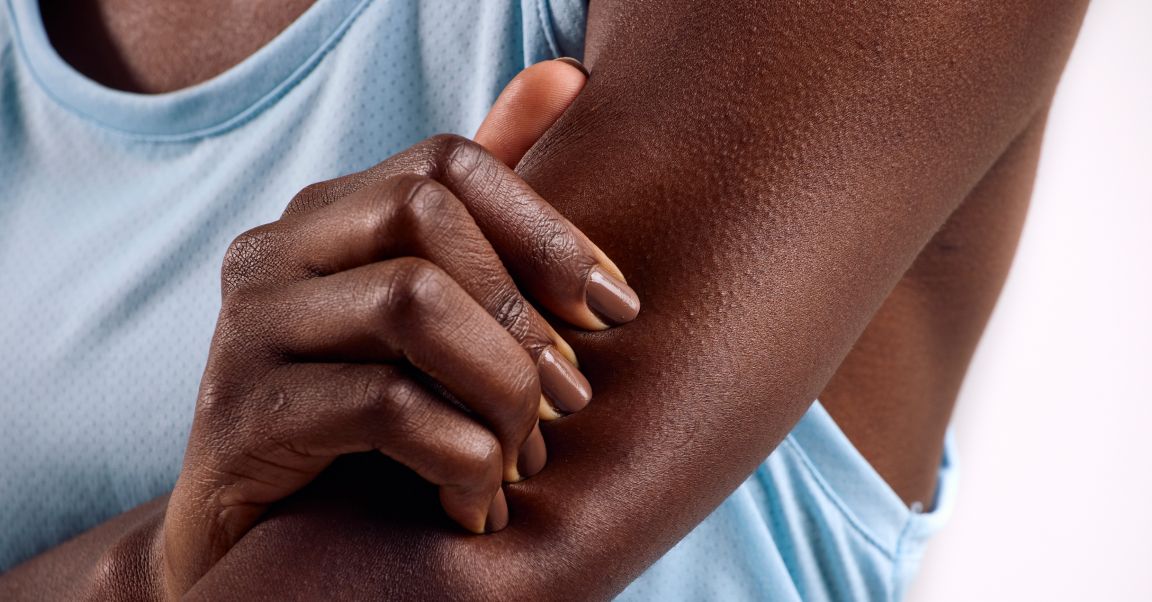
What’s not surprising? That lots of different things can cause itchiness: dry skin, healing sunburn, eczema, switching to a new skin product. What is surprising? That menopause belongs on that list. The hormonal shifts brought on by the menopause transition could make your skin feel itchy or irritated — and it’s one of the more unexpected symptoms of fluctuating hormones.
Read on to find out more about itchy skin in perimenopause and menopause, why it can happen, problem areas, and skincare habits to try and relieve the sensation.
Why menopause and perimenopause can make you itch
During menopause, levels of estrogen fluctuate wildly until they settle at a very low level compared to what they were. The impact of low estrogen during the menopause transition has implications for skin structure and function. For example, when estrogen drops, so does your natural production of collagen and elastin. In fact, women’s skin may lose up to 30% of its collagen in the first five years of being post-menopausal. After this, the decline slows down, but you still can lose as much as 2% annually for the next 20 years.
This loss of collagen can cause your skin to become dry and thin and, as a result, feel itchy. Estrogen receptors are found throughout the skin, but the highest density is in the face, genital region, and legs. Adding to the issue: After the age of 50, the pH level of your skin changes. With this, your skin becomes more sensitive, and you’re more likely to experience rashes or irritated skin.
It's key to remember that menopausal itchy skin is a symptom, not a diagnosis. While dermatological changes can be associated with estrogen deficiency, itchiness during this stage of life may also be caused by common conditions, from eczema and contact dermatitis, to infections or unrelated medical issues. You should seek the advice of a medical professional for any dermatological changes that are bothersome or persist.
Common problem areas: Skin, scalp, ears, and genitals
Itchy skin in menopause is a bothersome symptom of the menopause transition. The skin is an endocrine organ, so it’s impacted by hormone levels. While itchiness can happen to any part of your body, it’s most likely to appear on your:
Face
Neck
Chest
Back
Limbs
Genital region
Dry, itchy skin on the body and face
Low estrogen levels can make your skin drier and less able to retain water. You may come to notice dry patches, irritation where clothing rubs, or tightness in your skin after bathing. To help with menopause itching, wash with a mild cleanser rather than soap, which can be too drying on your skin.
After bathing, apply a moisturizer with hyaluronic acid or glycerin. You should also continue to wear sunscreen each day before going outdoors. It’s important to use a sunscreen product that is broad-spectrum, with SPF30 or higher.
Itchy scalp during perimenopause or menopause
Some women experience an itchy scalp during the menopause transition. This may be because menopause reduces the production of oil in the scalp, and dryness and sensitivity can worsen the itch. However, other conditions like dandruff or dermatitis can overlap with this, so you may need a clinician’s advice to determine the cause of your itchy scalp in perimenopause.
Itchy ears in perimenopause
Menopause itching can show up in unexpected places, too, like your ears. Itchy ears are a less common symptom of the menopause transition, but they can get dry, flaky, and scratchy. If you’re prone to eczema in your ears, you may find that this also flares up due to hormonal fluctuations.
The reduction in estrogen affects moisture levels in your body’s mucous membranes, like those found in your ears. This means you may feel itching deep in your ear, too. Don’t try to relieve the itch by inserting objects like a cotton swab in your ear canal. Instead, seek advice from your clinician if your itchy ears in menopause are persistent, bothersome, or if you notice any discharge.
Genital and vulvar itching
Genitourinary syndrome of menopause (GSM) results from the lining of your vagina becoming drier and thinner. It leads to itchiness in up to half of menopausal and post-menopausal women. Estrogen plays a role in keeping your vagina healthy and the tissue there thick and flexible. Reduced estrogen production can cause vaginal dryness and lead to itching, burning, and painful intercourse.
As estrogen receptors are abundant around the genital areas, skin conditions here are also more common throughout menopause. Declining collagen due to low estrogen levels may also contribute to GSM. It’s important to go over any symptoms of genital itching in menopause with a clinician, as infections and dermatological conditions could be to blame and often require different treatments.
Home care and skincare habits that can help
While itchy skin in menopause can be bothersome, tiresome, and downright uncomfortable, there are some simple steps that may help relieve it.
Use fragrance-free cleansers: Opt for a cleanser rather than a soap, which can be drying. Choose a cleanser that’s gentle and fragrance-free to reduce the risk of further irritation.
Moisturize: Regularly moisturize throughout the day as you need to, with a product containing hydrating ingredients like hyaluronic acid or glycerin. You should also apply it as you get out of the bath or shower to lock in moisture.
Protect your skin: Apply sunscreen before leaving the house, and ensure it’s SPF30 or above. Cold weather can also have a drying effect, so wear gloves in the winter to keep your hands protected.
Address allergy symptoms: Changing hormone levels can alter or worsen allergies, which can have an effect on skin dryness and cause itchiness. For example, estrogen may alter or skew the immune response towards an allergy and affect histamine levels, which can make itchiness worse.
Choose breathable fabrics: Wear loose-fitting, breathable fabrics over areas that are particularly dry and sensitive to avoid any unnecessary irritation.
Stay hydrated: Estrogen and progesterone also affect your fluid and electrolyte balance, which can cause skin to dry out. Drinking plenty of water can help offset that.
Avoid scratching: As hard as it may be, try to resist scratching your skin. You can use a cool compress to provide relief.
Turn down the heat: Try to shower in lukewarm water rather than very hot water, which can remove oils important for maintaining moisturized skin.
When to see a clinician about menopause itching, rashes, or irritation
Sometimes, a menopause skin rash or severe itching could be an indication of another condition, or something more serious. Consult your clinician if you notice any of the following:
An itch lasting several weeks
Severe itching at night that disrupts sleep
Visible rash that spreads or shows signs of being infected
Genital itch accompanied by discharge, odor, or bleeding
Ear itch alongside pain or drainage
Signs of allergy, like swelling or difficulty breathing
Yellowing of your skin or eyes
If your itching starts affecting everyday life or is causing you distress, it’s best to seek help. A clinician can provide you with tailored options based on the severity of your symptoms, your medical background, and personal preferences.
Medical options you can discuss with your clinician
Depending on the cause and impacted area, your clinician might suggest topical therapies or treatments for underlying skin conditions, or even hormone menopause treatments (if appropriate). Antihistamines, usually used to treat allergies, or over-the-counter hydrocortisone creams, may also be recommended to help relieve itching.
Systemic hormone therapy
Hormone therapy is not prescribed specifically for itchiness, but if you’re taking it for other symptoms, like hot flashes, it may help with your skin as well by increasing the collagen content. Some studies suggest that HRT can improve skin hydration, when taken systematically or topically.
Topical hormone therapy
For vaginal or vulva dryness, topical estrogen may be prescribed to help provide relief. As the estrogen is applied locally, very little enters your bloodstream.
Non-hormone treatments
For other areas of the body, your clinician may suggest moisturizers or medicated creams to soothe the irritated areas. Corticosteroids may be recommended to help reduce inflammation, or antihistamines to help manage itching.
Nighttime itching and sleep: practical tips
If you’re experiencing perimenopause or menopause itching, you’re likely to be uncomfortable, which can make it a whole lot harder to fall asleep. Menopause nighttime itching is made worse by the fact that insomnia and sleep difficulties are common symptoms of the menopause transition, with up to 70% of women reporting sleep problems.
To help relieve nighttime itching, try:
Keeping your bedroom cool: Try to keep your bedroom at a comfortable temperature to avoid sweating as much.
Choose loose, lightweight pajamas: Wear something comfortable and breathable to sleep in, to prevent any extra irritation on sensitive areas.
Manage your stress: Experiment with relaxation strategies before bed, from light reading to medication, to help you wind down without screens.
Keep your nails short: This can keep you from scratching your skin while you sleep when you start to itch.
Moisturize after bathing: Opt for a lukewarm shower and apply a fragrance-free moisturizer. Oatmeal baths may also help to soothe and relieve itching.
What else could it be? Allergies, skin conditions, and other health issues
It can be hard to determine the root cause of itching during midlife, as it can have many causes — some unrelated to menopause.
Age-related skin sensitivity
After you turn 50, the pH level of your skin changes. This can cause your skin to become more sensitive, and more likely to develop rashes. This means if you have an existing skin condition, like eczema or rosacea, it could become worse.
Eczema
Eczema is a group of conditions that causes inflammation, redness, and itchy skin. Adults can get any type of eczema, including atopic dermatitis and contact dermatitis. Atopic dermatitis can have overlapping symptoms with menopause itch and can be intense, causing you to lose sleep and affecting your quality of life if unresolved.
Medical conditions
Rashes can also be due to infection or medical conditions. For example, multiple skin diseases are associated with thyroid hormone dysregulation. Furthermore, kidney disease can have an effect on your skin, and it may cause extremely dry, itchy skin and rashes to form. Some skin changes can also be a sign of liver dysfunction.
Overall, it’s important not to self-diagnose and get checked out by a clinician if you notice persistent itching or widespread symptoms. Determining the cause of the itching is the first step in finding a solution and potential menopause relief.
The bottom line on menopause-related itch
Itching during perimenopause and menopause can be a common symptom. Lower levels of estrogen decrease collagen production in the skin, which can lead to itchiness. While it can be managed with gentle care, if it’s persistent, affecting your quality of life, or accompanied by any warning signs, speak to your clinician.
Any menopause relief care plan should be unique and tailored to you, and your clinician will be able to discuss your medical history, symptom severity, and personal preferences when reviewing treatment options to help with itchy skin in menopause.
Navigating menopause is complex. Weight Watchers offers tailored support programs to help you manage your symptoms and well-being on this journey.