The practical guide to working out on a GLP-1
Exercising while on a GLP-1 can help improve body composition, support weight loss, and set you up for long-term results. Here’s how to do it.
After you start a GLP-1 medication, it can feel as if many parts of your life have changed: your appetite, your relationship with food, your weight — even how you feel exercising. That’s because working out can feel like an entirely new experience after you start taking a weight-loss med, complete with different energy levels and different goals.
But at the same time, having a regular exercise routine is key to maintaining muscle mass and overall health while you lose weight. With that in mind, consider this your guide for how to move to improve your body composition, body function, and well-being while taking a GLP-1.
Key takeaways
Prioritizing exercise on Ozempic, Wegovy, Mounjaro, Zepbound, or other GLP-1s protects lean muscle mass and improves body composition during weight loss. (Note: Ozempic and Mounjaro are approved for management of type 2 diabetes; Wegovy and Zepbound are approved for chronic weight management.)
Strength training is needed to help retain muscle and improve strength. Aim for at least two days per week.
Aerobic exercise is also recommended for overall physical function, heart and lung health, and longevity. A good goal is 150 minutes of moderate intensity cardio per week.
Fueling and hydrating for a workout can help you have more energy and aid in recovery. If your appetite is low, liquid calories from a sports drink or smoothie might feel easier to digest.
Why exercise matters on a GLP-1
“Your medication may help you lose weight, but it’s exercise that’s going to help you achieve the right kind of weight loss,” says Justin Kompf, Ph.D., fitness director at Weight Watchers. As you lose weight, some will naturally come from both muscle and fat. The goal is to lose more fat while maintaining as much muscle mass as you can. And one of the keys to doing that is strength training. Research suggests that the combination of GLP-1 medications with strength training (and increased protein intake) can help minimize muscle loss and support healthy weight loss.
Exercise also helps fight some of the slow down in your metabolism that comes from losing weight. The less you weigh, the fewer calories your body needs to function, Kompf explains, and exercise gives your metabolism a slight boost to offset that. On top of that, exercise improves your aerobic fitness and lowers your risk of many chronic diseases. “If you could put the health benefits of exercise into a pill, every doctor would recommend it,” Kompf says.
Working out regularly while on a GLP-1 is even more important if you find yourself needing to go off the medication for some reason. There’s evidence that exercising while taking a GLP-1 helps you better maintain the results — including weight loss and body composition changes — after stopping it.
Strength training comes first
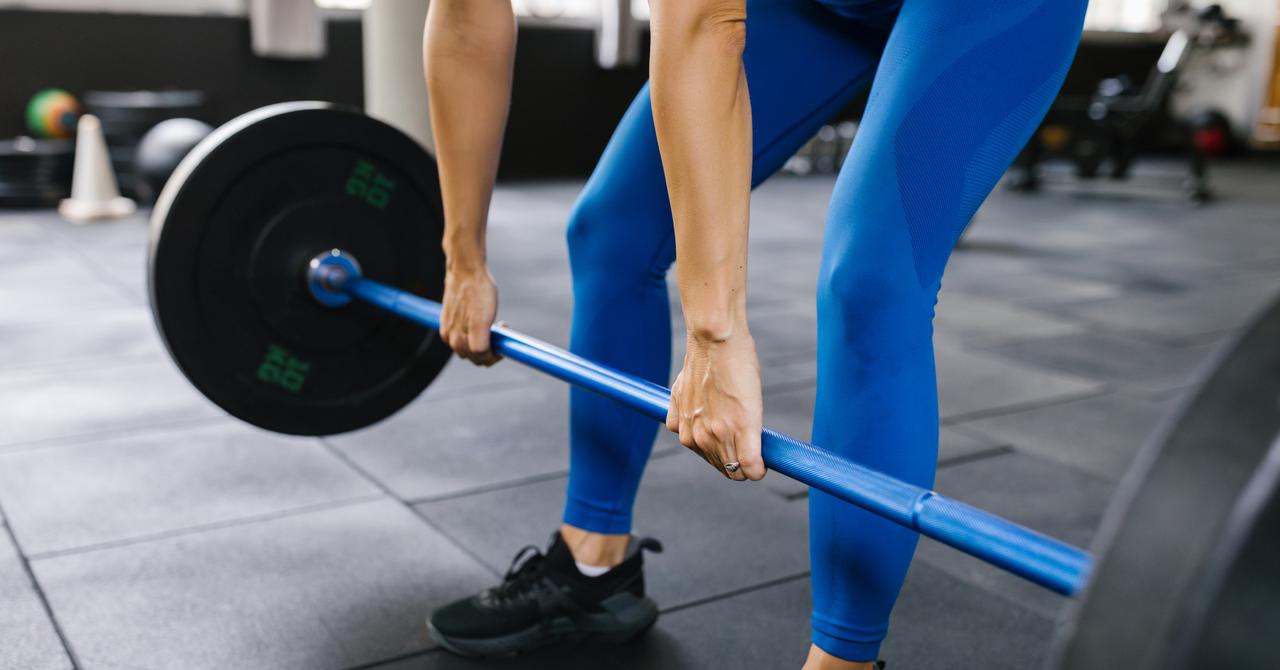
If you want to keep more of your muscle while losing weight on a GLP-1, strength training needs to be a priority. A good place to start: the physical activity recommendations for all Americans from the Centers for Disease Control and Prevention (CDC). These guidelines recommend muscle-strengthening activities two or more days a week, focusing on working all major muscle groups. This can be done with free weights and machines (or, to a lesser extent, resistance bands and body weight).
In order to net the most muscle-building benefits, just make sure you strength train correctly. According to the American College of Sports Medicine (ACSM), healthy adults should do something called progressive resistance training. This means that as you get stronger, you increase how much stress you’re putting on your muscles. To put this into practice, you might increase the weight you use on a machine or free weight, step up to a heavier resistance band, or do a higher number of body weight push-ups or squats.
Where cardio fits in
Cardiovascular exercise may not be the optimal way to keep muscle, but you still need it for your physical function and heart and lung health, says Kompf. Back to those CDC guidelines: They recommend 150 minutes of moderate-intensity physical activity per week, 75 minutes of vigorous physical activity, or a combination of the two. Walking, water aerobics, easy bike rides, playing doubles tennis, or mowing your lawn would all count towards that goal.
Paying attention to your activity level is especially important on a GLP-1 because data suggests users move less on the medication. Preliminary research suggests that people who take GLP-1s decrease their physical activity from 5,047 to 4,487 steps per day and lower their time spent being active from 28 minutes a day to 22. According to the authors, this study shows that weight loss alone doesn’t promote an increase in physical activity. What can help? Tracking your activity. 86% of Weight Watchers members who tracked their movement in the app felt it supported them in reaching their weight-loss goals.** Just sync your device, like Oura or Garmin, through the “Connected Devices” option in the app menu to see every step, spin, and stretch you do.
How to fuel your workouts
Protein and carbohydrates make a classic pre-workout snack, and it’s for good reason. Carbohydrates provide you with energy, while protein aids in muscle repair, says Umo Callins, M.S., RDN, CSSD, CPT, a sports dietitian and fitness coach.
The challenge with being on a GLP-1, though, is that you might not be very hungry or motivated to eat. Remind yourself that you don’t need to eat a lot. You can have a slice of toast or an apple with nut butter, a small yogurt with berries, or deli turkey and crackers. Callins also recommends something liquid, like a fruit smoothie. “It’s light and has easy-to-digest carbs, but it will still give you fuel to push in a workout,” she says. Whatever you choose, try to avoid high-fat foods, which can take longer to digest (and leave you with an upset stomach).
Finally, stay hydrated. If your thirst is down, take small sips at a time instead of trying to drink your whole water bottle in a few gulps, says Callins. You can also consider drinking a sports beverage. Formulations are different, but many contain both carbohydrates and electrolytes, which can give you hydration and fuel at the same time. Just make sure to do a scan of the nutrition label, as some sports drinks can be high in added sugar.
Training with lower energy and appetite
GLP-1s can lead to some low appetite days where you just don’t want to eat much at all. This can be due to how the medication works (by suppressing your appetite) and side effects like nausea. On those kinds of days, your energy might be so low that working out can feel especially challenging.
First, listen to your body and adjust your exercise plans, advises Callins. “If your energy is not there, there’s little benefit to jump into a high-intensity workout,” she says. The same applies to if you have side effects like queasiness after an injection.
In those instances, scale back your workout to something that’s less intense. For example, rather than a sweaty spin class, you might grab a friend to take a walk, do an evening yoga class, or join a low-impact live fitness Workshop through the WW app. “Just moving is important,” says Callins. Ask yourself: What would feel good in your body right now?
A note on safety
You should not jump into a strenuous exercise routine right away, as it can raise your risk for injury. So before starting to work out, it’s a good idea to check with your clinician first, and ask about any specific concerns they have for you.
Exercise should feel somewhat challenging, but it can still be enjoyable. Red flags that signal to stop and speak to a clinician: pain, shortness of breath, dizziness, and nausea. You don’t want to push yourself through an injury, as that will only sideline you for longer.
How Weight Watchers helps make movement a habit
Weight Watchers GLP-1 Success Program, offered to all Med+ members, can support you in building an exercise routine when taking a GLP-1 medication. The program features guidance on what to track (like protein and hydration) and coaching to help you create a movement routine that lasts. You also can follow along to on-demand workouts taught by Weight Watchers Coaches (find them in the Lifestyle tab in the app), exercise live with fellow members in fitness-focused Workshops, and get access to Pvolve workouts, which are low-impact functional fitness classes that are included in your membership. And by syncing your activity tracker in the app, you can make sure every bit of motion counts towards your daily goal.
There’s evidence that all this works: Weight Watchers Med+ members who were prescribed a GLP-1 and participated in the GLP-1 Success Program increased the number of days they did strength training by 53%.* That’s a real life difference that matters.
The bottom line
For lasting weight loss success, aerobic fitness, and muscle mass, exercise on a GLP-1 medication is non-negotiable. Start with strength training, which will help you retain muscle as you lose weight, but also include aerobic exercise for overall heart health and physical functioning. Don’t forget to fuel up appropriately with healthy carbohydrates and protein and stay hydrated with water. When beginning to work out, start small and stay consistent. With regular movement, you’ll achieve a stronger, healthier body during and after weight loss.